

People who don't know anything about the sport of hockey know at least one thing about it: the players are capital-t Tough. They are allowed to fight whenever they want to, play through injuries that would floor most other professional athletes and don't shy away from physical pain.
There are other kinds of pain, however. The kind that fans, media and oftentimes teammates can't see. Get in a fight and catch a right flush to the eye, and it'll be easy to see the result of that. Go through surgery to repair muscle tears in the knee, and there'll be physical scarring. How many hockey players walk around sporting some version of a no-tooth grin?
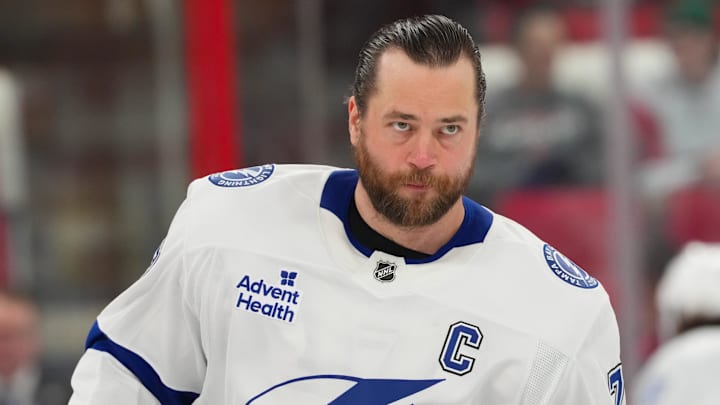
It's the mental side of things that people--not just professional athletes, but people--can really struggle with. There's a stigma attached to mental health, especially in the realm of professional hockey, where the warrior mentality reigns supreme. Tampa Bay Lightning defenseman Victor Hedman is among the toughest players in the NHL at any given time. Which is why he deserves so much credit for speaking openly about his issues with mental health that took him away from the game of hockey this season.
In a statement on social media, Hedman wrote that "[o]ver the past couple of months, I made the decision to step away and focus on my mental health. It was not an easy decision, but it was the right one."
Hedman continued, stating that "I've always believed that being a leader means doing what's best for the team. In this case, it also meant doing what was necessary to take care of myself, so I can be the best player, teammate, husband and father I expect to be."
Fair or not, athletes have a platform that they can leverage into far-reaching statements. By using his platform in this way, Hedman is sending a tremendously loud and strong message to anyone who may be dealing with similar issues. That it's ok to be dealing with these things, and that help is there to be sought out. That we can't be strong for the people we care about if our mental state isn't where it needs to be.
Hedman wrote that "[t]his is something that exists in our game more than people see. If this moment helps make it easier for others to take care of themselves when they need to, that matters."
His legacy as a Lightning player is already solidified. Whenever he decides to hang up his skates, Hedman will see his No. 77 raised to the rafters in a ceremony befitting of the blueliner he has always been on the ice. But stepping out of hockey's collective comfort zone and leaving a mark like this off the ice... the importance of that can't be understated. Kids and adults alike look up to their favorite players, and it's so, so easy to forget that they are just people, too.
Southwest Airlines used to run television ads about how NHL players are just like us (they are just really good at hockey.) The TV spots were lighthearted in nature, but it is still 100 percent true. They have good days and bad days. Fight with their spouse before they get to work. Argue with their kids and have to go to a dentist that they don't like. Yet they are expected to go out and perform at the highest level, night in and night out. The weight of that pressure must be staggering.
We here at BoltsByTheBay.com wanted to use our (admittedly smaller) platform here to give stick taps to Victor Hedman for helping chip away at the toxic bravado that has surrounded professional hockey for far too long. Players will always need to be tough out on the ice. That doesn't mean they have to try to be invulnerable off of it, too. With this statement, Hedman continues to normalize the discussion surrounding mental health in the NHL, and the league is a touch better because of it.
 Add us as a preferred source on Google